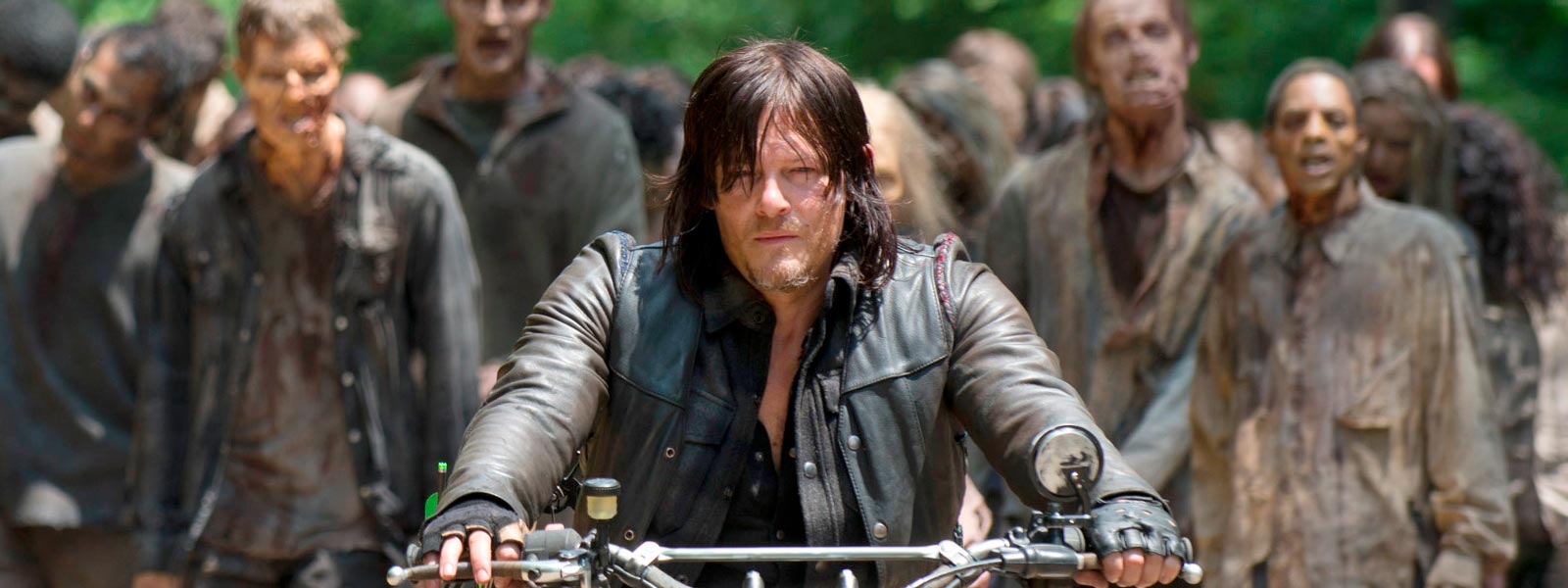
Liz and I are big fans of The Walking Dead. We have watched it since the beginning. It's such a great show. But I think this past Sunday's episode, No Way Out, was the best in the history of the show.
If you haven't watched the show yet then feel free to stop reading because there will be spoilers. If you don't watch the show at all you are missing out, but you can keep reading because there were some incredible illustrations in this week's episode.
Before you read further I want you to watch the show and think about it's implications for you personally and for the church.
First observation: The show began with everyone as victims. Darryl and his crew were victims to the biker gang. Glen and the teen girl (who's name has left me) were victims who couldn't get to where they wanted to go. Rick and the rest of Alexandria were victims to the hoard of walkers who had invaded Alexandria.
As victims they acted like victims: Scared, sheepish, hiding, cowering.
They covered themselves in zombie body parts so as to blend in and not be noticed.
And if you watched the episode you know that fear lived out led to death (I was very sad about this because I thought Rick had finally found love again) and to Carl getting his eye shot out.
As a result, Rick threw his fear and safety aside and decided to do something about the problem. He took off alone to take on a million walkers.
But something happened when Rick had the courage to take the first step. Everyone followed. There are huge ramifications and implications of this kind of courage in our own lives. We need to be people of courage.
This courage was also displayed by Darryl when he took out the bikers with the RPG. That was so awesome I almost stood up and cheered.
Another observation: They didn't go after each other. They went after the walkers. It reminds me that our battle is not against flesh and blood but against the ruler, authorities and powers of this dark world. We have an enemy. It's not each other.
Another observation: We can do more together than alone. They had a major team building experience. They needed one another. They figured that out by working together, fighting together.
I could write more but I don't have the time. And to be honest, I wrote this mainly for myself. I need to remember how important courage is. Be the one to risk for the sake of a cause that's bigger than me, even with death/failure on the line. I have an enemy and it's not the other human beings that share the planet with me. Make sure I'm fighting the right enemy. I need community. I need others.
Random thoughts, learnings, musings and other highly pertinent information from me.
Tuesday, February 16, 2016
Thursday, February 11, 2016
Two books you need to read
I want to recommend two great books as follow-ups to my sermon this past Sunday about us being Salt and Light.
The first book is Bob Roberts', Bold as Love. I have had respect for Bob since he spoke to my evangelism class in grad school, and my respect for him continues to grow. If you're not following him on twitter, you should be. He's doing incredible things to represent Christians and Jesus well around the globe, especially among Muslims.
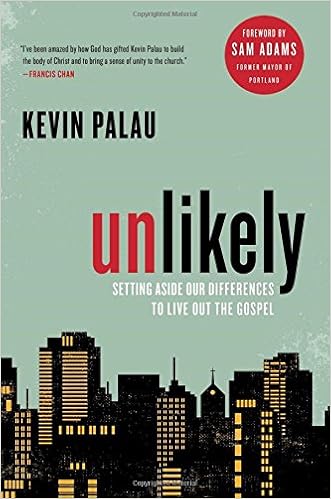
The second book is by Kevin Palau. It's titled Unlikely. I heard Kevin last week at the Come Closer Lunch here in Spartanburg. His story is fascinating. It's about how churches in Portland have come together to serve their city and the unlikely relationships they have made along the way. It's a fascinating book.
There are a lot of books I could recommend, but these two have been challenging and helpful to me.
The first book is Bob Roberts', Bold as Love. I have had respect for Bob since he spoke to my evangelism class in grad school, and my respect for him continues to grow. If you're not following him on twitter, you should be. He's doing incredible things to represent Christians and Jesus well around the globe, especially among Muslims.
The second book is by Kevin Palau. It's titled Unlikely. I heard Kevin last week at the Come Closer Lunch here in Spartanburg. His story is fascinating. It's about how churches in Portland have come together to serve their city and the unlikely relationships they have made along the way. It's a fascinating book.
There are a lot of books I could recommend, but these two have been challenging and helpful to me.
Wednesday, February 10, 2016
Live it like a Song - From Jon Foreman
There is a melody inside of you, an anthem buried in your chest.
Your heart keeps time, your thoughts and your words sing out in a cadence and a rhythm that is yours alone.
Every day this song of yours is burning comes to life against the backdrop of the great symphony of time.
The stars, the moon, the sun, the rising and the falling of the tide, the rhythm of the seasons keeping time, and then the human chorus chimes in with emails, and traffic, and coffee shops.
This is the context where your melody takes place.
And yet, you are unique. You were born to sing a song with your life that no one else can sing.
When you were a kid, this melody of yours was easy to sing. It wasn’t perfect, but it came so natural, so free.
And now, maybe it’s harder to find. I know firsthand – the years add layers of pain, fear, doubt, shame and insecurity.
You read the headlines: murder, war, divorce, hatred, and death and you wonder:
How can this fragile little melody ever make a dent?
Late at night you ask yourself, Does my song matter?
I’ve been there. those questions are real.
I’ve spent many nights alone, looking up at the moon, asking the sky:
“Does my time here on the planet have a purpose?”
And you breathe and you close your eyes and listen –
You hear the ocean’s roar.
You hear the wind blowing through the trees.
And maybe you hear the contagious, unbridled joy of your daughters laughter.
And it’s almost as if the composer of time and space has answered back in wordless beauty:
you matter.
your song matters.
There is a void in the symphony of life when you are silent –
Your melody is needed – the good, the bad, the ugly, the shameful, the painful… all of it.
Don’t be afraid. You walk through the tension.
Be brave and begin to sing the truth – one note at a time.
————————————————————-
so how do you live a good song? How do you make it count?
(tune)
Breathe, stretch, meditate, pray.
This is your instrument! Get a good night sleep.
When you tune, you learn to know your instrument. You realize what is yours to change and what is outside of your control.
(listen)
What does the song need? What do my friends need? My family, my community?
My favorite musicians are the ones who play exactly what’s needed – nothing more, nothing less.
That takes an incredible listener.
Listen to BB king – he could play three notes that say more than most guitars players who have ever lived.
(be yourself)
I spent most of Jr. High trying to be BB king. And it’s good to learn from the masters. We learn best by imitation. But imitation has limitations, and the biggest thing that BB King taught me was that I am not BB King. BE YOURSELF.
You’ll never be as smooth as BB. You’ll never be as cool as Keith. But with a lifetime of practice, you’ll start to sound like you.
(practice)
To be yourself will take a lifetime of practice. Humans aren’t like the other species here on the planet. Being human takes practice.
You don’t have to teach a fish to swim or a horse to run. But it takes us years to learn to walk and talk.
A doctor practices medicine. A monk practices his faith. You practice being you.
It’s going to take time.
(wrong notes)
And you will fail along the way. You will break strings, you will hit the wrong note, you will be frustrated, and you will want to quit.
Congratulations: you’re human!
Forgive yourself. Forgive those around you – believe it or not, they’re human too.
I used to hate playing live music – I could get it perfect on the record, but live was the unknown.
I don’t know if you heard the mistake I made in that last song – the mistakes never stop!
The beauty of music and life is time travel – you enter the song a younger soul than when you exit. And even after the broken string the symphony of life is ever unfolding around you.
Don’t let the wrong notes in the past ruin the present and the future – the song is still unfolding.
(tension and release)
Music is built by tension and release. Dissonance and resolve.
Humanity is stretched tight between the womb and the grave, between control and chaos, between conflict and resolve.
Like a guitar string, we are stretched tight, pulled in two places at once.
And when you’re in a difficult season you want to run towards one end or the other. To cut the chord.
And yet, to cut the string is death. The tension is where the beauty happens.
The melody of our lives is when we dance on these strings of tension.
Be brave, your melody is worth it. Be courageous, your melody is needed.
I dare you.
I dare you to live out your purpose.
That the melody within you would soar above the fear, above the crowd, above the past, above the pain,
and that the song that you were born to sing would come to life.
The composer of time and space has given you a part to play in the great symphony of time.
This is your life, this is your opus. I dare you to move.
Friday, January 29, 2016
A different way to live as a Christian in a post-Christian culture
I love the book of Daniel. Always have. It has some of the most exciting stories many of us grew up learning. Shadrach, Meshach and Abednego in the blazing furnace. Daniel in the lions den.
It also has some really confusing stuff. The kings of Babylon have crazy, outlandish dreams that mean something and come true. A had appears and writes bad news in some weird language. And then there's all the apocrophal stuff that folks have been arguing over for years.
As I was reading through Daniel this morning, however, I had a thought. I think book of Daniel shows us how to live out our faith in a culture that is post-Christian, anti-Christian and not-interested-in-anything-Christian.
And what we learn is in direct contrast to how many of us are living in our current culture.
Take chapter 1. Daniel resolves not to defile himself with the king's food and wine. He doesn't condemn the king's food and wine. He just makes a decision to not defile himself, and he's willing to suffer the consequences of that decision. He never judges the chief official. He doesn't say it's wrong for others to eat and drink the king's food and wine. He know's it's wrong for him and he lives out his faith. And God rewards him greatly.
Take the fiery furnace story. Shadrach, Meshach and Abednego don't condemn the worship of the gold statue. They don't ridicule the king's policy. They just refuse to bow in worship to the gold statue. And they are willing to suffer the consequences of that decision. And God rewards them for greatly.
Take Daniel and the lion's den. Daniel doesn't condemn the king's anti-Jewish-prayer policy. He doesn't speak out against the men who wrote the bill and lobbied for the bill. He doesn't complain that it's not fair. He just continues to pray three times a day, just like he'd always done. And he's willing to suffer the consequences of his decision. And God rewards him greatly.
I think we could learn something from the book of Daniel about how to live as Christians in our current culture. And maybe, possibly, hopefully, God might start rewarding us greatly like he did those four exiled Jewish men.
It also has some really confusing stuff. The kings of Babylon have crazy, outlandish dreams that mean something and come true. A had appears and writes bad news in some weird language. And then there's all the apocrophal stuff that folks have been arguing over for years.
As I was reading through Daniel this morning, however, I had a thought. I think book of Daniel shows us how to live out our faith in a culture that is post-Christian, anti-Christian and not-interested-in-anything-Christian.
And what we learn is in direct contrast to how many of us are living in our current culture.
Take chapter 1. Daniel resolves not to defile himself with the king's food and wine. He doesn't condemn the king's food and wine. He just makes a decision to not defile himself, and he's willing to suffer the consequences of that decision. He never judges the chief official. He doesn't say it's wrong for others to eat and drink the king's food and wine. He know's it's wrong for him and he lives out his faith. And God rewards him greatly.
Take the fiery furnace story. Shadrach, Meshach and Abednego don't condemn the worship of the gold statue. They don't ridicule the king's policy. They just refuse to bow in worship to the gold statue. And they are willing to suffer the consequences of that decision. And God rewards them for greatly.
Take Daniel and the lion's den. Daniel doesn't condemn the king's anti-Jewish-prayer policy. He doesn't speak out against the men who wrote the bill and lobbied for the bill. He doesn't complain that it's not fair. He just continues to pray three times a day, just like he'd always done. And he's willing to suffer the consequences of his decision. And God rewards him greatly.
I think we could learn something from the book of Daniel about how to live as Christians in our current culture. And maybe, possibly, hopefully, God might start rewarding us greatly like he did those four exiled Jewish men.
Monday, January 25, 2016
Identity and priorities - yesterday's sermon manuscript
Yesterday's ice-covered-roads prevented us from gathering for worship. I tried to figure out how to self-record my sermon and then upload it, but my tech-handicapped self decided instead to just share my sermon manuscript. Here it is.
8 But Daniel resolved not to defile himself with the royal food and wine, and he asked the chief official for permission not to defile himself this way.
11 Daniel then said to the guard whom the chief official had appointed over Daniel, Hananiah, Mishael and Azariah, 12 "Please test your servants for ten days: Give us nothing but vegetables to eat and water to drink. 13 Then compare our appearance with that of the young men who eat the royal food, and treat your servants in accordance with what you see." 14 So he agreed to this and tested them for ten days.
15 At the end of the ten days they looked healthier and better nourished than any of the young men who ate the royal food. 16 So the guard took away their choice food and the wine they were to drink and gave them vegetables instead.
17 To these four young men God gave knowledge and understanding of all kinds of literature and learning. And Daniel could understand visions and dreams of all kinds.
18 At the end of the time set by the king to bring them in, the chief official presented them to Nebuchadnezzar. 19 The king talked with them, and he found none equal to Daniel, Hananiah, Mishael and Azariah; so they entered the king's service.
Let me ask you a question. If you were to
list out your top five priorities, what would they be? Here’s another: If an
outside observer were to come and do an inventory of your life, what would they
say your priorities are? What about your values? Here’s another question: How
do you figure out what your priorities are supposed to be? We live in a culture
of misplaced priorities. That’s why it’s so important to nail down our
identity, who we are, because what we believe about who we are is going to
shape what we do.
We’re going to see that this morning as we
look at a story of a guy who knew who he was, and he let who he was impact how
he lived, even though it could have cost him his life. If you have your Bible
I’d like for you to open to Daniel 1.
Let me give you some background. In the year
605 BC, 605 years before the birth of Christ, God was fed up with the nation of
Israel for all their disobedience and rebellion so he allowed King
Nebuchadnezzar, who was the king of Babylon, to invade Israel and they pretty
much destroyed the nation. Nebuchadnezzar went into Jerusalem and took over the
capital city, and as the Babylonians were accustomed to do, rounded up the best
and the brightest of the young nobility, the young men from noble families, and
brought them back to Babylon.
Now four of the young men he brought out are
very famous men, and if you grew up in Sunday school you’ve heard their names
before. They are Daniel, Shadrach, Meshach and Abednego. So that’s where the
story begins, and we’re going to begin this morning reading in verse 3:
Then the king ordered Ashpenaz, chief of his court officials, to
bring in some of the Israelites from the royal family and the nobility- 4
young men without any physical defect, handsome, showing aptitude for every
kind of learning, well informed, quick to understand, and qualified to serve in
the king's palace. He was to teach them the language and literature of the
Babylonians.
So here’s the set-up. One of these young men,
as we’re about to see, is a guy by the name of Daniel. Daniel finds himself in
a foreign culture. He’s probably a teenager, anywhere from 13 to 17 years old.
It’s hard to imagine. His family is probably dead. He’s been taken out of his
homeland, marched across two deserts all the way to Babylon and now he’s a
slave. They’ve given him a different haircut, different clothes. They’ve given
him different jewelry. They possibly pierced his ear to show that he is a
slave. They’ve given him a different name. They’re teaching him a different language,
a different literature. All in an effort to change his identity from who God
says he was to who they said he was. Culture was attempting to reshape his
identity.
5 The king assigned them a daily amount of food and wine from the
king's table. They were to be trained for three years, and after that they were
to enter the king's service.
6 Among these were some from Judah: Daniel, Hananiah, Mishael and Azariah.
Now let me stop here because at first glance
this looks like a great deal. These guys get to eat food and drink wine from
the king’s table. And it is a big deal, just not for the reasons we might
think. In that particular culture, the food that was served to the King, was
first offered to the idols. With the idea being that since this food was first
offered to the gods, that anyone who ate this food or drank this wine, would
get the strength and the wisdom of the gods. So consequently, anyone who ate
this food or drank this wine, as they rose up to positions of power, the credit
was given to the gods for whom these meals represented.
So Daniel, in his teenage mind, is faced with
a dilemma: He can either do what he feels like God would have him do as an
Israelite, which would be abstaining from the King’s food and wine, or he can
do what he feels like the king would have him do. But he can’t have it both
ways. He can say, “God, I realize that to eat this food is to defile myself, go
against who you say I am, and to refuse to recognize you as God, but I’ll tell
you what. I’m going to go ahead and eat it anyway and ask that you give me
grace and forgiveness.” His other option is to say, “I’m going to obey God and
hope that the king will be gracious and forgiving.”
Now which way would you go? I mean where are
you more likely to find grace and forgiveness? If you opt to obey God there could
be an immediate consequence to your decision. The king, as we’ll find out in a
minute, could have your head for disobedience.
But if you go ahead and obey the king and ask
for grace on God’s side there may not be any immediate consequence. Nothing may
happen at all. God may never bring it up again. You might just go on my merry
way.
So here’s his dilemma. Daniel had to decide,
in light of who he is, what is he going to do, who was he going to be loyal to?
Who was he going to prioritize: His heavenly father or his earthly king. He
couldn’t have it both ways. That was his dilemma. Look at what Daniel does:
8 But Daniel resolved not to defile himself with the royal food and wine, and he asked the chief official for permission not to defile himself this way.
This is an incredibly bold action. Daniel
draws the line and says that’s it. That’s as far as I go. You’ve tried to remove
everything Hebrew from me. But I know who I am and you are not going to take
away is my commitment to my God.
Now why would Daniel make this decision? Why
would he resolve not to defile himself this way?
I think it’s because Daniel knew who he was. He
also knew who God was. And he knew who he was in light of who God was, and that
impacted every area of his life.
There are three things that come out of this
story that I think have incredible applications to us as we set priorities to
live out who we are. The first one comes from verse 8. Did you notice what
Daniel did up front before he knew how the story was going to work out? Before
he knew that everything was going to work his way? Before he knew if he would even survive physically? The Scripture
says that Daniel resolved, he “made up
his mind.” That means he
decided up front, “I am not going to compromise who I am for the sake of
pleasing a pagan king. I’m just not going to do it. I don’t know how it’s going
to work out. I don’t know if I’ll survive. Before I know any details. Before I
know how the story is going to end. Before I even know how I’m going to
approach this.” It says he “resolved in his heart, he made up his mind, I will
not defile myself.”
1. Decide up front who you are and what your priorities are going
to be.
You’ve got to decide that you’re going to let
who God says you are define your priorities. That takes courage. Either you
decide your priorities or someone else will.
There’s something else that comes out of this
story and this is the part that we can’t factor in. Look what happens after
Daniel makes up his mind. Start with verse 8 again.
But Daniel resolved not to defile himself with the royal food and
wine, and he asked the chief official for permission not to defile himself this
way.
So he goes to the chief official, the guy
that’s supposed to train him and says, “Um, I’d like to be an exception. I mean
I know you’ve been doing this for years. I know you’ve herded hundreds of
people through this program, but could I have a pass.” Imagine the fear going in to that
conversation. Verse 9: Now…. What’s the next word? Now…God. Isn’t that great?
Now God…. Not before.
9 Now God had caused the official to show favor and sympathy to
Daniel.
2. Now God…. You see, what you don’t know is what God is able and willing
to do in your life once you get your priorities straight. Now God. When you get
your priorities straight you open the door for God to work supernaturally on
your behalf.
The last thing that comes out of this story
is very practical. Look what
happens next:
Now God had caused the official to show favor and sympathy to
Daniel, 10 but the official told Daniel, "I am afraid of my
lord the king, who has assigned your food and drink. Why should he see you
looking worse than the other young men your age? The king would then have my
head because of you."
This is a life and death issue we’re dealing
with, but look at verse 11. This is brilliant:
11 Daniel then said to the guard whom the chief official had appointed over Daniel, Hananiah, Mishael and Azariah, 12 "Please test your servants for ten days: Give us nothing but vegetables to eat and water to drink. 13 Then compare our appearance with that of the young men who eat the royal food, and treat your servants in accordance with what you see." 14 So he agreed to this and tested them for ten days.
You know what the third thing is I love in
this story?
3. Trust God enough to put him to the test.
They said, God, we trust you so much that we’re
going to put you to the test. I know they were talking with Ashpenaz, but they
were really exercising their faith.
If you were sitting across the table from me
and you were to tell me your story and you’d tell me I couldn’t really
understand this, I’m just a pastor, here’s what I’d say to you. Why not put God
to the test? Give God a month. Just a month. Take 30 days and say for 30 days
I’m going to let who God says I am define those priorities and rearrange my
life accordingly. Then at the end of the 30 days evaluate. I dare you.
So I want to challenge you to give him a
month. That is for one month you
let who God says you are determine your priorities.
I believe God will show up in your life. And
that’s exactly what happened with Daniel and his three friends.
15 At the end of the ten days they looked healthier and better nourished than any of the young men who ate the royal food. 16 So the guard took away their choice food and the wine they were to drink and gave them vegetables instead.
17 To these four young men God gave knowledge and understanding of all kinds of literature and learning. And Daniel could understand visions and dreams of all kinds.
18 At the end of the time set by the king to bring them in, the chief official presented them to Nebuchadnezzar. 19 The king talked with them, and he found none equal to Daniel, Hananiah, Mishael and Azariah; so they entered the king's service.
Now God. We’re dealing with God. This isn’t
luck or hocus pocus. This is a principle.
And God honors those who honor him.
So where do you start? It begins with you
determining your priorities. And here’s how I’ve done it.
1.
My relationship with God.
2.
My relationship with Liz
3.
My relationship with my kids.
4.
My physical health.
5.
My job.
So here’s your homework: Set your priorities
according to who God says you are, and then live by those.
A resource I would highly recommend is Andy Stanley's book, Choosing to Cheat. It's an easy read that is immensely practical.
Friday, January 15, 2016
Tips on how to pray
One of the reasons we don't pray consistently is we aren't sure how to pray. Here are some tips that I was thinking through this morning.
First, connect your prayers with what you are reading in the Bible. By that I mean, don't just read the Bible. Pray through it. Turn what you are reading into prayers. They could be prayers asking for help in doing what it says. They could be prayers asking for understanding what it says. They could be prayers that agree with what it says. But let the Bible direct your prayers.
Second, for those of you who have been around Hub City Church for any amount of time at all, you know our mission is to Make Disciples of Jesus who Make Disciples of Jesus.
The way we define a disciple is someone who hears from God and does what he says.
Another more detailed definition of a disciple is this: Someone who is following Jesus, being changed by Jesus and committed to the mission of Jesus.
I was thinking through those definitions this morning a was prompted to pray through those definitions for myself, my family and our church family.
Why am I telling you this?
I think it would be great for you to pray this for yourself, your family and your church.
Lord, today, help me hear from you and do what you say. Show me how to follow you and help me follow you. Change me. Show me where you are working and help me to join you on your mission.
First, connect your prayers with what you are reading in the Bible. By that I mean, don't just read the Bible. Pray through it. Turn what you are reading into prayers. They could be prayers asking for help in doing what it says. They could be prayers asking for understanding what it says. They could be prayers that agree with what it says. But let the Bible direct your prayers.
Second, for those of you who have been around Hub City Church for any amount of time at all, you know our mission is to Make Disciples of Jesus who Make Disciples of Jesus.
The way we define a disciple is someone who hears from God and does what he says.
Another more detailed definition of a disciple is this: Someone who is following Jesus, being changed by Jesus and committed to the mission of Jesus.
I was thinking through those definitions this morning a was prompted to pray through those definitions for myself, my family and our church family.
Why am I telling you this?
I think it would be great for you to pray this for yourself, your family and your church.
Lord, today, help me hear from you and do what you say. Show me how to follow you and help me follow you. Change me. Show me where you are working and help me to join you on your mission.
Wednesday, December 16, 2015
Take responsibility for ONE
I have a challenge for my fellow Jesus followers, especially for those of you who are a part of the Hub City Church family.
I challenge each of you to take responsibility for one person over the next year. That responsibility includes sharing with them the love of Jesus, introducing them to Jesus, walking with them as they become a follower of Jesus, and then helping them become an active part of your local church (Hub City Church, if you're a part of the fam).
In fact, you can start this week. What if you took responsibility for bringing one person to our worship gathering on Sunday who's not got a worship gathering of their own?
I read a just released study this week that said 53% of those who aren't in church are willing to visit a church the Sunday before Christmas if someone will just invite them.
We have a responsibility, as followers of Jesus, for the people God has put around us. I know that we can't force someone to follow Jesus. But we can do our part: Showing the love of Jesus, inviting them to follow Jesus, and inviting them to experience Jesus with your church family.
To not do this says something about our hearts. And what it says isn't good.
We all have excuses: My circle of friends is too small. I don't know people who don't know Jesus. I'm not sure what I'll say.
Almost all of our excuses come from a place where we're trusting in our abilities. Don't trust in yourself. Trust in the One who can open doors and prepare hearts. Trust in the One who wants people to know Him.
So, are you in? Challenge issued. Let it start this week.
I challenge each of you to take responsibility for one person over the next year. That responsibility includes sharing with them the love of Jesus, introducing them to Jesus, walking with them as they become a follower of Jesus, and then helping them become an active part of your local church (Hub City Church, if you're a part of the fam).
In fact, you can start this week. What if you took responsibility for bringing one person to our worship gathering on Sunday who's not got a worship gathering of their own?
I read a just released study this week that said 53% of those who aren't in church are willing to visit a church the Sunday before Christmas if someone will just invite them.
We have a responsibility, as followers of Jesus, for the people God has put around us. I know that we can't force someone to follow Jesus. But we can do our part: Showing the love of Jesus, inviting them to follow Jesus, and inviting them to experience Jesus with your church family.
To not do this says something about our hearts. And what it says isn't good.
We all have excuses: My circle of friends is too small. I don't know people who don't know Jesus. I'm not sure what I'll say.
Almost all of our excuses come from a place where we're trusting in our abilities. Don't trust in yourself. Trust in the One who can open doors and prepare hearts. Trust in the One who wants people to know Him.
So, are you in? Challenge issued. Let it start this week.
Friday, December 11, 2015
Excuses
Some of you know that Levi played football for the first time this past Fall. He was QB for his team and he loved it. Rarely a day goes by without Levi asking me to throw the ball with him.
He's come up with his own practice plan. Right now he's working on receiving.
Like most third graders, Levi drops a good number of passes. And like most people, he always has a good excuse for dropping the pass: "Dad, you threw it behind me... It was too high... I can't run that fast...."
I have two mantras that I repeat whenever he throws an excuse my way: "No excuses", and "If you touch it you can catch it."
When we're practicing catching a football the most important thing is to catch the football (If you touch it you can catch it). Don't make excuses for not doing what's most important.
All of us are good at making excuses for not doing what's most important. And all of us need to stop.
Do the most important things, and don't make excuses why you can't.
What are the most important things? For me they are my relationship with God, my family, exercise, my mental health, and pastoring Hub City... in that order.
You need to figure out what's most important to you, and then do that, no excuses!
He's come up with his own practice plan. Right now he's working on receiving.
Like most third graders, Levi drops a good number of passes. And like most people, he always has a good excuse for dropping the pass: "Dad, you threw it behind me... It was too high... I can't run that fast...."
I have two mantras that I repeat whenever he throws an excuse my way: "No excuses", and "If you touch it you can catch it."
When we're practicing catching a football the most important thing is to catch the football (If you touch it you can catch it). Don't make excuses for not doing what's most important.
Do the most important things, and don't make excuses why you can't.
What are the most important things? For me they are my relationship with God, my family, exercise, my mental health, and pastoring Hub City... in that order.
You need to figure out what's most important to you, and then do that, no excuses!
Thursday, December 10, 2015
Some Parenting advice
My dad sent me a parenting tip. I think it's worth following.
Most people today think it improper to discipline children, so I have tried other methods to control my kids when they have had one of 'those moments.'
Since I'm a pilot, one method that I have found very effective is for me to just take the child for a short flight during which I say nothing and give the child the opportunity to reflect on his or her behavior.
I don't know whether it's the steady vibration from the engines, or just the time away from any distractions such as TV, video games, computer, iPod, etc.
Either way, my kids usually calm down and stop misbehaving after our flight together. I believe that eye to eye contact during these sessions is an important element in achieving the desired results.
I've included a photo below of one of my sessions with my son, in case you would like to use the technique.
Most people today think it improper to discipline children, so I have tried other methods to control my kids when they have had one of 'those moments.'
Since I'm a pilot, one method that I have found very effective is for me to just take the child for a short flight during which I say nothing and give the child the opportunity to reflect on his or her behavior.
I don't know whether it's the steady vibration from the engines, or just the time away from any distractions such as TV, video games, computer, iPod, etc.
Either way, my kids usually calm down and stop misbehaving after our flight together. I believe that eye to eye contact during these sessions is an important element in achieving the desired results.
I've included a photo below of one of my sessions with my son, in case you would like to use the technique.
Depression and exercise
I've been reading about depression lately. Yesterday I read something that I want to share because I think it can help a bunch of us. I know it has been helpful to me.
We all know that exercise is important for our physical health. What we might not know is that exercise is of equal importance to our mental health.
A number of studies show that regular exercise can help us recover from depression. One such study showed that three session of aerobic activity a week worked as well as medication to reduce the symptoms of depression. Another study showed that moderate aerobic activity done three to five times a week can cut moderate depression symptoms nearly in half.
What that means for you and me is that we need to get off our butt and do something active. Take a job. Swim some laps. Go for a walk.
In talking about this in his book, Leading on Empty, Wayne Cordeiro challenges us to start small but start now!
I agree.
I know you're busy. I know it's cold. I know you might not feel like it. But do whatever it takes to add some physical activity to your life. It might just help lift you out of your depression.
We all know that exercise is important for our physical health. What we might not know is that exercise is of equal importance to our mental health.
A number of studies show that regular exercise can help us recover from depression. One such study showed that three session of aerobic activity a week worked as well as medication to reduce the symptoms of depression. Another study showed that moderate aerobic activity done three to five times a week can cut moderate depression symptoms nearly in half.
What that means for you and me is that we need to get off our butt and do something active. Take a job. Swim some laps. Go for a walk.
In talking about this in his book, Leading on Empty, Wayne Cordeiro challenges us to start small but start now!
I agree.
I know you're busy. I know it's cold. I know you might not feel like it. But do whatever it takes to add some physical activity to your life. It might just help lift you out of your depression.
Wednesday, December 02, 2015
We don't need God anymore
I could be wrong. I've been wrong in the past, and will be wrong in the future. But I'm convinced that one of the biggest barriers to being disciples of Jesus in our American culture is that we don't really need God anymore.
We have everything we need. Most of us have way more than we need.
There are places around the world where people desperately need God for things we take for granted: Food, shelter, safety, water, health....
We have all of those in abundance. We don't really need God anymore.
But that's a lie. It's an illusion.
We need God just as much as others, but we've substituted so much for God (which is what the Bible calls idolatry) that it appears we're just fine without him.
But we're not fine without him.
In desperation we need to daily follow the instruction of 2 Chronicles 7:14 -
If my people, who are called by my name, will humble themselves and pray and seek my face and turn from their wicked ways, then will I hear from heaven, and will forgive their sin, and will heal their land.
Do what this verse says this week. Then God will hear, forgive and heal.
We have everything we need. Most of us have way more than we need.
There are places around the world where people desperately need God for things we take for granted: Food, shelter, safety, water, health....
We have all of those in abundance. We don't really need God anymore.
But that's a lie. It's an illusion.
We need God just as much as others, but we've substituted so much for God (which is what the Bible calls idolatry) that it appears we're just fine without him.
But we're not fine without him.
In desperation we need to daily follow the instruction of 2 Chronicles 7:14 -
If my people, who are called by my name, will humble themselves and pray and seek my face and turn from their wicked ways, then will I hear from heaven, and will forgive their sin, and will heal their land.
Do what this verse says this week. Then God will hear, forgive and heal.
Wednesday, November 11, 2015
A tribute to the oldest vet I know
This is my article that came out in last Friday's Herald-Journal. Thought it worth reposting today.
Three weeks ago my grandpa passed the century mark. It’s
pretty cool having a grandpa who’s spent 100 years on this planet.
The past three weeks have been a whirlwind of activity for
him. The partying started with more than a hundred family and friends stopping
by his house to celebrate a life well lived. He’s been on the front page of the
Greenville News and featured on a few local TV news broadcasts.
Last week Grandpa, and his 91 year-old brother Homer, were
able to take the Honor Flight to visit the WWII memorial in Washington, DC.
Grandpa is a veteran of WWII. He landed on Omaha Beach six days after D-Day and
eventually fought his way from there to Berlin.
I love Grandpa Henry stories. One time he got chewed out by
his commanding officer for taking a German Army motorcycle for a spin around
the German countryside because it could have gotten him shot by one of his
fellow Americans. Grandpa always loved motorcycles.
Then there’s the one about the French family that invited
him into their home for breakfast. He taught them how to put cheese in their
scrambled eggs. They served him wine with breakfast.
His unit was responsible for rescuing thousands of Polish citizens
from a German prison camp. He says “That was one of the greatest experiences of
my life, setting those people free.” I get teary-eyed just typing that.
Grandpa is a part of what Tom Brokaw calls The Greatest Generation. There is so
much that makes Grandpa a living example of what Tom’s book. He has always had a
willingness to do whatever needed to be done, without asking for credit and
special favor. Before he could come home, he spent nine months in the Hospital
recovering from injuries brought on by the war, but then he came home, went to
work, raised a family and never complained. You can still find him in the yard working
on his ’61 Corvair, because those cars always need some sort of maintenance.
He is someone who approaches life with fresh gratitude
daily. It seems to ooze out of his pores. We would all be better off if we had
his attitude.
Grandpa has been married to my 94 year-old Grandma for 77
years. That level of love and commitment serves as a great example to a generation
where it is rarely seen.
Veterans hold a special place in my heart. My dad is a
veteran. I spend the first 18 years of my life as an Army Brat. I am grateful
for all of our veterans, but this Veteran’s Day I’m especially grateful for my
Grandpa.
Monday, November 09, 2015
From a friend of mine
I'm a really big believer that those of us who call ourselves Christians should act like Christians. I realize this is a ridiculous statement that should go without saying, but the fact of the matter is that too often Christians don't act like Christians.
I am sorry for the times when I don't act like I'm supposed to act. I'm sorry for the times my fellow brothers and sisters don't act like they're supposed to act. We must do better.
That is why we're talking about what it means to be counter-cultural at Hub City. To be counter-cultural means we live lives that are different from our culture, and at the same time, attractive to our culture.
Yesterday we take about the character trait of humility. Mike did a phenomenal job, and he gave us some assignments: Consider others before yourself, Engage in silence, Remember that it's not all about you.
This coming week I'm going to be talking about what is possibly the most difficult counter-cultural trait of all because it is in direct opposition to the consumerism that undergirds everything in our culture.
In two weeks we're talking about commitment. Whetting our appetite for this topic, a friend of mine, the infamous Chris Pollard, pastor of The Journey here in Spartanburg, posted some great statements that flow into all of our counter-cultural talk. They were so good that I asked him for permission to share. He gave it, so here they are:
All of this is about us living different from our culture and attractive to our culture.
I am sorry for the times when I don't act like I'm supposed to act. I'm sorry for the times my fellow brothers and sisters don't act like they're supposed to act. We must do better.
That is why we're talking about what it means to be counter-cultural at Hub City. To be counter-cultural means we live lives that are different from our culture, and at the same time, attractive to our culture.
Yesterday we take about the character trait of humility. Mike did a phenomenal job, and he gave us some assignments: Consider others before yourself, Engage in silence, Remember that it's not all about you.
This coming week I'm going to be talking about what is possibly the most difficult counter-cultural trait of all because it is in direct opposition to the consumerism that undergirds everything in our culture.
In two weeks we're talking about commitment. Whetting our appetite for this topic, a friend of mine, the infamous Chris Pollard, pastor of The Journey here in Spartanburg, posted some great statements that flow into all of our counter-cultural talk. They were so good that I asked him for permission to share. He gave it, so here they are:
- God's people in our country are meeting together less and less often (Avg 3x/mo). Is it any wonder we are weak?
- We have sacrificed relationships & community for events & experiences.
- Often, the first sign that we have stepped away from God is that we have stepped away from God's people.
All of this is about us living different from our culture and attractive to our culture.
Friday, November 06, 2015
Enjoying the roller-coaster ride of parenting
Anybody who is a parent knows the ups and downs of parenting. Six Flags couldn't design a roller-coaster modeled on parenting because it would cause trauma, whiplash and possibly, paralysis.
There are good days. There are hard days. There are days when you feel like you've got the hang of things. There are other days when you have no idea what you're doing.
The past couple of months have been a unique time in our parenting. Nathan started High School and has been consumed with marching band. Levi has been playing football. He now has a path to the NFL planned out for himself. Just this past week Matthew started off-season training with the High School Tennis team.
All of this has left us a bit stretched, and I woke up this morning feeling a bit emotional about it all.
Tomorrow is the marching band state championship. I'm probably biased, but Byrnes' program is phenomenal. I love that Nathan has the opportunity to be a part of something bigger than himself. I hope they win state. I'm even a little surprised that I am sad about the season is coming to an end. It has been such a great experience for Nathan.
Tomorrow is also supposed to be Levi's final football game of the season. Unfortunately, the game will probably be rained out. It has been so much fun watching him have fun quarterbacking and leading and encouraging his young team.
I'm writing about this because sometimes in the busyness and ups and downs of parenting we forget to pause and reflect on the present. My emotions reminded me to pause today.
Liz and I remind each other often that time is short. Our time with our kids is short. So, even through the roller-coaster ride, remember to enjoy the journey.
And with that being said: Go Rebel Regiment! Win State!!!
There are good days. There are hard days. There are days when you feel like you've got the hang of things. There are other days when you have no idea what you're doing.
The past couple of months have been a unique time in our parenting. Nathan started High School and has been consumed with marching band. Levi has been playing football. He now has a path to the NFL planned out for himself. Just this past week Matthew started off-season training with the High School Tennis team.
All of this has left us a bit stretched, and I woke up this morning feeling a bit emotional about it all.
Tomorrow is the marching band state championship. I'm probably biased, but Byrnes' program is phenomenal. I love that Nathan has the opportunity to be a part of something bigger than himself. I hope they win state. I'm even a little surprised that I am sad about the season is coming to an end. It has been such a great experience for Nathan.
Tomorrow is also supposed to be Levi's final football game of the season. Unfortunately, the game will probably be rained out. It has been so much fun watching him have fun quarterbacking and leading and encouraging his young team.
I'm writing about this because sometimes in the busyness and ups and downs of parenting we forget to pause and reflect on the present. My emotions reminded me to pause today.
Liz and I remind each other often that time is short. Our time with our kids is short. So, even through the roller-coaster ride, remember to enjoy the journey.
And with that being said: Go Rebel Regiment! Win State!!!
Wednesday, November 04, 2015
Counter-Culture
I’ve always been fascinated with the idea of
counter-culture. The problem with the phrase “counter-culture” is that all of
us have a different idea that comes to mind when we hear it.
Some people think of hippies. Other's think of David Platt's book by the same title. A friend of mine thinks of that stuff that grows on food that's been left on your counter too long.
And then there's the way we, as Christians, think of being counter-culture in our day. Most of the time when we think of counter-culture we approach it from an issues perspective. In other words, we are different based on how we stand or side with certain issues.
Issues are important. But I don’t think our stance on issues is what makes us counter-cultural. Where we stand on issues might make us different, but it’s not all that attractive. Issues seem to build walls and push people away.
Since there's to much confusion, let me define what I mean when I use the phrase “counter-culture.”
To be counter-cultural means living in a way that is both
different from our culture and attractive to our culture.
To be counter-culture means that you live a life that is in
contrast to the current culture. It involves being different. But to be
counter-cultural is to be different in such a way that is attractive and that
draws people to want to step away from their current culture into your
counter-culture.
There’s something about it that is both different and
attractive.
This is a great description of how we, as followers of Jesus, should live. We need to live lives that are in contrast to our current
culture. Our contrast needs to be attractive, in that people want what we have.
But how do we live in a way that is both different from our culture and attractive to our culture?
Well, instead of an issue-based counter-cultural way of living, I think we need to have a character-trait-based counter-cultural way of living. The
Bible lists out all kinds of counter-cultural traits that should characterize
our lives as Christians. They
are evidences of God’s working in our lives. They are character traits that are
in direct contrast to the character traits we see displayed in our culture.
We're going to be talking about this counter-cultural way of living during the month of November at Hub City. I look forward to seeing you this Sunday. God has something he wants to say to you.
Wednesday, October 21, 2015
But I don't want to
Anyone who has ever been in any sort of relationship knows that forgiveness is essential to the health of a relationship.
I've noticed there are two things that keep us from forgiving others.
First, we don't know how to forgive.
Second, we don't want to forgive.
I can help you if you don't know how to forgive. It's not easy, but it is a pretty simple process of canceling the debt that someone owes you.
If you just don't want to forgive, well, I can't help you.
But I will remind you of a few things Scripture says to those of us who are Christians about forgiveness.
We are commanded to forgive. Colossians 3:13 says: 13 Bear with each other and forgive one another if any of you has a grievance against someone. Forgive as the Lord forgave you. Meaning, if you refuse to forgive you are being disobedient.
Jesus warns us about not wanting to forgive in Matthew 6: 14 For if you forgive other people when they sin against you, your heavenly Father will also forgive you. 15 But if you do not forgive others their sins, your Father will not forgive your sins.
Maybe that will motivate you to develop the habit of forgiveness. It sure motivates me.
One more thing: Refusing to forgive ends up hurting the one who refuses to forgive more than it hurts anybody else. Why would you do that to yourself?
May God grant you favor as you develop the habit of forgiveness.
I've noticed there are two things that keep us from forgiving others.
First, we don't know how to forgive.
Second, we don't want to forgive.
I can help you if you don't know how to forgive. It's not easy, but it is a pretty simple process of canceling the debt that someone owes you.
If you just don't want to forgive, well, I can't help you.
But I will remind you of a few things Scripture says to those of us who are Christians about forgiveness.
We are commanded to forgive. Colossians 3:13 says: 13 Bear with each other and forgive one another if any of you has a grievance against someone. Forgive as the Lord forgave you. Meaning, if you refuse to forgive you are being disobedient.
Jesus warns us about not wanting to forgive in Matthew 6: 14 For if you forgive other people when they sin against you, your heavenly Father will also forgive you. 15 But if you do not forgive others their sins, your Father will not forgive your sins.
Maybe that will motivate you to develop the habit of forgiveness. It sure motivates me.
One more thing: Refusing to forgive ends up hurting the one who refuses to forgive more than it hurts anybody else. Why would you do that to yourself?
May God grant you favor as you develop the habit of forgiveness.
Subscribe to:
Posts (Atom)